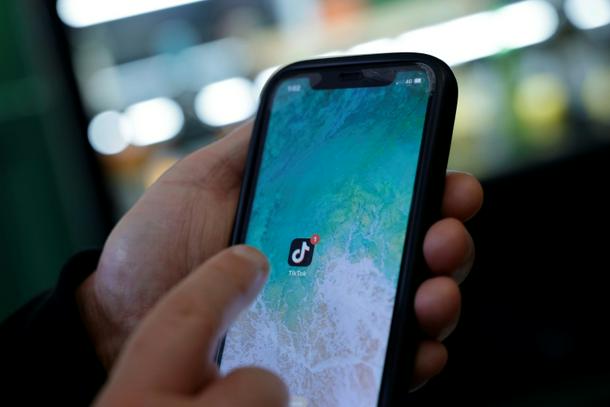
The European Commission launched the probe into TikTok under its content law, the Digital Services Act, in February 2024
Brussels (Belgium) (AFP) - The EU said Friday that TikTok needs to change its “addictive design” or risk heavy fines under the bloc’s digital content rules, drawing a sharp pushback from the Chinese-owned platform.
In preliminary conclusions of a probe opened two years ago, the European Commission said it found TikTok was not taking effective steps to address the app’s negative impacts, especially on minors and vulnerable adults.
“TikTok’s addictive design is in breach of the Digital Services Act,” said commission spokesperson Thomas Regnier, citing concerns with features such as infinite scroll, autoplay, push notifications, and a highly personalised recommender system.
“These features lead to the compulsive use of the app, especially for our kids, and this poses major risks to their mental health and wellbeing,” Regnier said, adding: “The measures that TikTok has in place are simply not enough.”
TikTok rejected the commission’s findings, saying they “present a categorically false and entirely meritless depiction of our platform”, a spokesperson said in a statement.
“We will take whatever steps are necessary to challenge these findings through every means available to us,” the spokesperson said.
The DSA is part of a bolstered legal armoury adopted by the EU in recent years to curb Big Tech’s excesses, and officials had until now said TikTok was cooperating with the bloc’s digital regulators.
TikTok will now have access to the EU’s findings in order to defend itself against the claims.
EU tech chief Henna Virkkunen told reporters that “TikTok has to take actions, they have to change the design of their service in Europe to protect our minors and their wellbeing.”
The commission gave examples of what the platform could alter, such as:
– the platform’s “infinite scroll” offering users an uninterrupted feed
– implementing effective “screen time breaks”, including during the night
– adapting its recommender system, the algorithms used by platforms to feed users more personalised content.
- ‘Compulsive use’ of TikTok -
The February 2024 investigation was the first opened into TikTok under the DSA, the bloc’s powerful content moderation law that has faced the wrath of the US administration under President Donald Trump.
In presenting the probe findings, Regnier cited what he called “extremely alarming” statistics on the app’s use in the EU.
TikTok was “by far” the most used platform after midnight by children between 13 and 18, he said, with seven percent of children aged 12 to 15 spending four to five hours daily on the platform.
Brussels accused TikTok of disregarding “important indicators of compulsive use of the app” such as the time minors spent on the platform at night.
It also said TikTok had not implemented effective measures to mitigate risks, taking particular aim at screen time management and parental control tools.
Its time management tools were “easy to dismiss” including for young users, the commission found, while parental controls required “additional time and skills from parents to introduce” them.
- ‘Safe by design’ -
The findings come as several European countries move to curb access to social media for younger teenagers, with officials weighing whether it is time to follow suit at EU level.
Briefing reporters Friday, Virkkunen said her priority was to make platforms safe for all users, children included.
“Social media should be so safe by design that we shouldn’t have that kind of very high age restriction,” she said.
If the regulator’s views on TikTok are confirmed, the commission can impose a fine of up to six percent of the company’s total worldwide annual turnover.
The EU began a separate probe into TikTok in December 2024 on alleged foreign interference during the Romanian presidential elections.
EU spokesman Regnier said earlier this week that TikTok was “extremely cooperative” during that investigation and was taking measures to address the commission’s concerns.
He added that while the probe remained open, regulators could monitor how TikTok behaves during other elections.