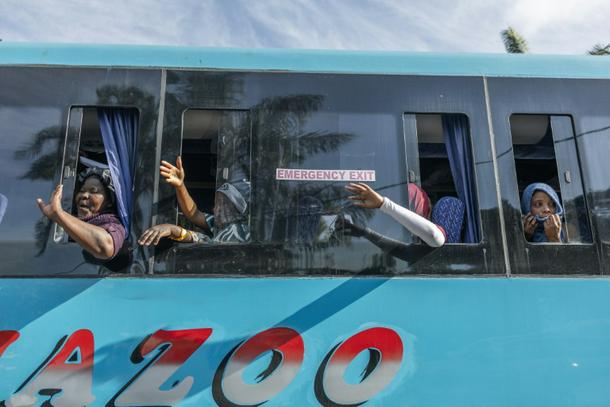
Malawi commissioned buses to bring its citizens home
Johannesburg (AFP) - South Africa has repatriated 2,745 foreigners in the week after President Cyril Ramaphosa vowed tougher action against illegal immigration, the country’s home affairs minister said on Sunday.
One of Africa’s largest economies, South Africa has long attracted migrant workers from across the continent, both legally and illegally.
But saddled with an unemployment rate above 30 percent, it has experienced recurring spurts of anti-immigrant unrest, including fresh violence in recent weeks.
Mobs of South Africans carrying sticks, whips and shields have marched through parts of the country ordering foreigners with no residency papers to leave by June 30.
Growing security fears after businesses were looted and foreigners targeted have prompted citizens of Nigeria, Malawi, Ghana, Zimbabwe and Mozambique to accept voluntary repatriation organised by their governments.
“As of last night, the number we can report is 2,745 repatriations that have come in this period since the president spoke,” Home Affairs Minister Leon Schreiber told reporters.
“It is a moving target,” he said.
The government said most of those repatriated were in the country illegally.
They include Malawian nationals, about 7,000 of whom have been sheltering in an open field in the eastern port city of Durban, according to an inter-ministerial migration committee set up after the president’s address.
Eight buses commissioned by the Malawian government began moving its citizens on Sunday, with South Africa providing 10 additional buses to speed up deportations, the committee said.
Some 560 people, including about 200 children, took the journey on Sunday, Malawi Consul General Max Biwi said.
Among those boarding the first buses, some carried babies on their backs and small bags of belongings.
“I’m relieved we are finally leaving. It’s better than living in fear here,” said Fortunate Chilenje from Blantyre, Malawi’s commercial capital.
The 25-year-old had lived in South Africa for three years, she told AFP, adding that threats to leave had followed her even at the camp, one of the largest to emerge since the unrest began.
- Tensions -
The government said on Sunday it did not operate refugee camps and had no intention of establishing them, even on a temporary basis.
Another passenger, Laina Nala from Mangochi in southern Malawi, said she simply wanted to be dropped as close to her home as possible, rather than continuing on to Blantyre.
“Blantyre is too far and expensive from there,” she said.
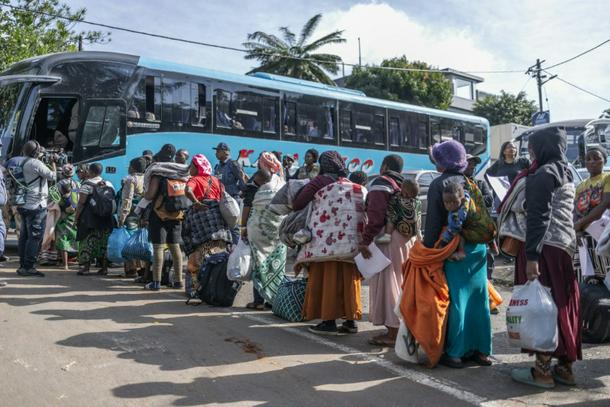
Thousands of Malawians have been sheltering in an open field in the eastern port city of Durban
For Hassan Hasha, 27, a debt linked to his journey to South Africa still hung over his head.
He said he had barely stayed in South Africa for weeks before the anti-foreigner sentiment flared, but added: “I have resigned myself to going home”.
Last week, Ramaphosa acknowledged public concerns over illegal immigration but warned that the authorities would not tolerate anyone taking the law into their own hands.
Tensions escalated after two Mozambicans were killed following a May 29 march against illegal migrants in the Western Cape town of Mossel Bay. Mozambican authorities put the toll at five.
There are more than three million foreigners living in South Africa, or 5.1 percent of the population, according to the statistics agency.