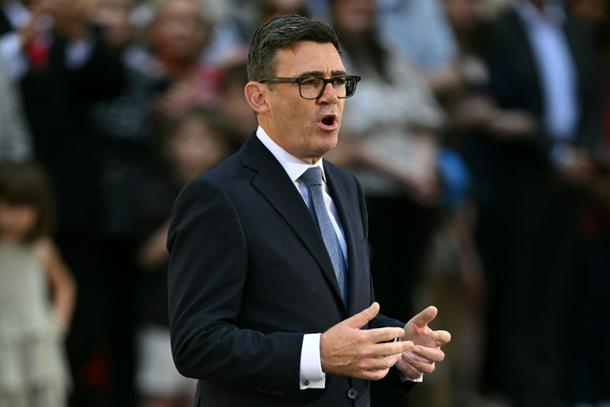
Andy Burnham said he wants to "cut taxes on energy bills, put more money in people's pockets"
London (AFP) - Britain’s new Prime Minister Andy Burnham on Tuesday kickstarted his programme to ease the cost of living for millions of Britons by planning to remove tax on household electricity bills.
The Labour leader, who took over as PM on Monday, said value added tax (VAT) would be taken off bills from October in a policy costing the government about £850 million ($1.143 billion) in the current UK financial year.
“We’re taking immediate action to cut taxes on energy bills, put more money in people’s pockets and bring back hope,” Burnham said in a statement.
The measure is a saving of about £45 a year on the average household bill, the government said.
“The change supports the poorest households, who spend a higher percentage of their income on energy bills,” it added.
The measure’s start date is due to coincide with an expected rise in the UK energy regulator’s price cap on electricity and gas prices, a consequence of the US-Iran war.
The government said the tax cut would be funded by cancelling previous prime minister Keir Starmer’s plan for a digital ID scheme that would have cost the taxpayer £1.8 billion.
The new PM has said he wishes to ease pressure also on small businesses, hit by the previous Labour administration’s tax hikes.
At the same time, Burnham has pledged to respect the strict fiscal discipline seen under Starmer, whereby the government balances tax receipts with day-to-day state spending.
- ‘Fiscal control’ -
Official data Tuesday showed UK government borrowing dropped more than expected in June, handing a boost to new finance minister John Healey, who has replaced Rachel Reeves.
Public sector net borrowing was £16 billion in June, down one third on a year earlier, the Office for National Statistics said in a statement.
However, the ONS cautioned that “debt remains high by historical standards and close to the annual value of the entire UK economy”.
Reacting to the data, Healey said “fiscal control is the first duty of any” finance minister.
“And fiscal credibility is the bedrock for economic stability and for national security.”
Healey piled pressure on Starmer last month when he announced he was stepping down as defence secretary in a stinging criticism of the government’s defence budget – and the Treasury, which he will now oversee.
- Stable UK markets -
UK markets were largely steady Tuesday having shown some signs of unease ahead of Healey’s appointment as chancellor of the exchequer.
UK government bond rates had risen Monday after Burnham told British media there could be some “flexibility” allowed under the government’s balance-budget rules.
“The prime minister and I have talked about how we will work in lockstep to meet the fiscal rules with a buffer against uncertainty and how we’ll make life more affordable for working people right across the UK,” Healey added.
Separate official data Tuesday showed Britain’s unemployment rate unchanged at 4.9 percent.
Burnham’s long-term goal is a “reindustrialisation” of Britain and mass building of municipal housing.
While Britain’s economy has failed to take off since Labour returned to power two years ago, the International Monetary Fund forecasts it to outperform other major economies this year.