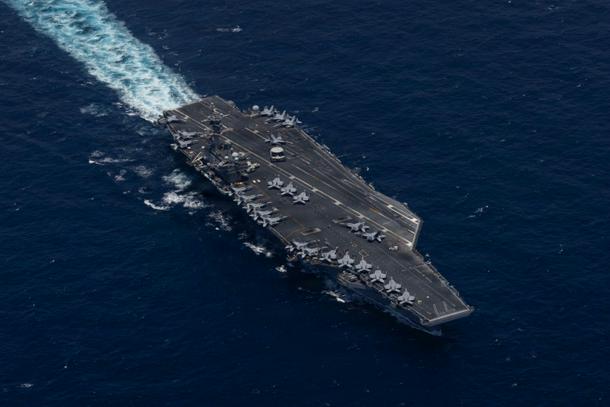
Trump said Washington's blockade of Iranian ports would remain in place as Tehran kept up its own closure of the vital waterway
Washington (United States) (AFP) - President Donald Trump said he was pausing the US military operation to guide stranded commercial ships through the Strait of Hormuz shortly after it began, citing a chance to seal a deal that would end two months of war with Iran.
The US leader said Washington’s blockade of Iranian ports would remain in place as Tehran kept up its own closure of the vital trade route in response to the US-Israeli war on the country, which has rocked markets and spiked fuel prices.
Trump wrote on social media that the decision to halt his so-called “Project Freedom” a day after it began came after requests from “mediator Pakistan and other countries”, saying “Great Progress has been made toward a Complete and Final Agreement” with Tehran.
“We have mutually agreed that, while the Blockade will remain in full force and effect, Project Freedom… will be paused for a short period of time to see whether or not the Agreement can be finalized and signed,” Trump wrote late Tuesday.
The decision means more than 22,000 seafarers and 1,500 commercial ships are still waiting to transit the strait, according to US officials.
Pakistan Prime Minister Shehbaz Sharif – a key mediator in the Middle East war – wrote on X that he was “hopeful” the current momentum would bring help bring an end to the conflict with a “lasting agreement.”
Trump made the abrupt U-turn as Iranian Foreign Minister Abbas Araghchi met Chinese counterpart Wang Yi in Beijing for talks on Wednesday, his first trip to Tehran’s close ally since the beginning of the war.
According to Iranian state TV, Araghchi told Wang that Tehran would “only accept a fair and comprehensive agreement.”
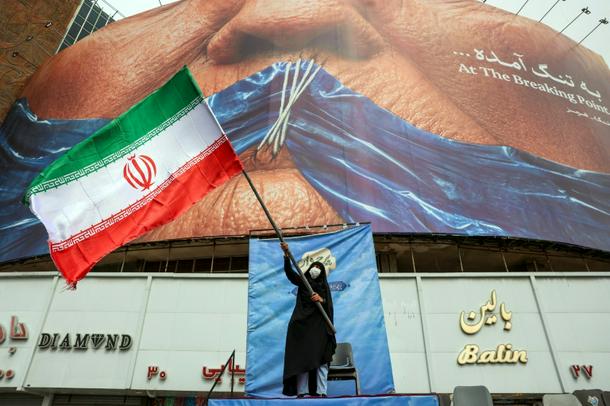
Progress in Iran talks has largely stalled since a first round of negotiations in Pakistan last month ended without a deal, as Tehran maintains its grip on the Hormuz strait
After the talks, Wang called for an end to hostilities and for both countries to reopen the Strait of Hormuz “as soon as possible,” his ministry said.
Before the visit, US Secretary of State Marco Rubio, a vocal China critic, called on Beijing to put pressure on Araghchi to end the blockade of the crucial waterway.
“I hope the Chinese tell him (Araghchi) what he needs to be told, and that is that what you were doing in the straits is causing you to be globally isolated,” Rubio said.
- Oil tumbles -
Trump’s tone came hours after Rubio said the US had completed its offensive operations against Iran.
Investors welcomed the decision to pause the ship-guiding plan, with Brent oil price tumbling more than five percent and West Texas Intermediate back below $100 a barrel.
Araghchi was visiting China days before Trump is also scheduled to visit on May 14 and 15 to meet President Xi Jinping – a trip he had delayed due to the war.
The Iranian minister later held a phone call about the war with Saudi Arabia’s foreign minister, Iranian media said, as back-channel diplomacy to find a solution continues.
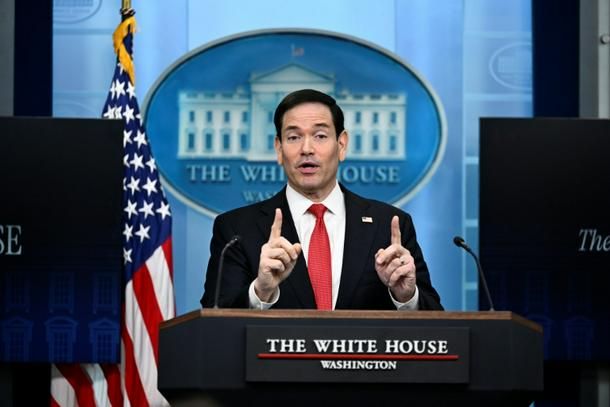
Top US diplomat Marco Rubio said the offensive stage of the Iran war was over, as a spate of attacks threatened to reignite the conflict
But progress in talks has largely stalled since a first round of negotiations in Pakistan last month ended without a deal as Tehran maintains its grip on the Hormuz strait, giving it key leverage.
Despite Rubio’s announcement of the end to “Operation Epic Fury”, the standoff in the vital waterway has led to claims of attacks by both sides.
Iran fired missiles and drones at US forces on Monday, while Washington said it struck six Iranian boats it accused of threatening commercial shipping.
The United Arab Emirates said it had engaged a barrage of missiles and drones from Iran for the second consecutive day on Tuesday – an accusation denied by Tehran.
It was the sharpest escalation since a truce took effect on April 8.
A container ship owned by French shipping company CMA CGM was also the “target of an attack” in the Strait of Hormuz on Tuesday, the major shipping firm said.
- ‘High alert’ -
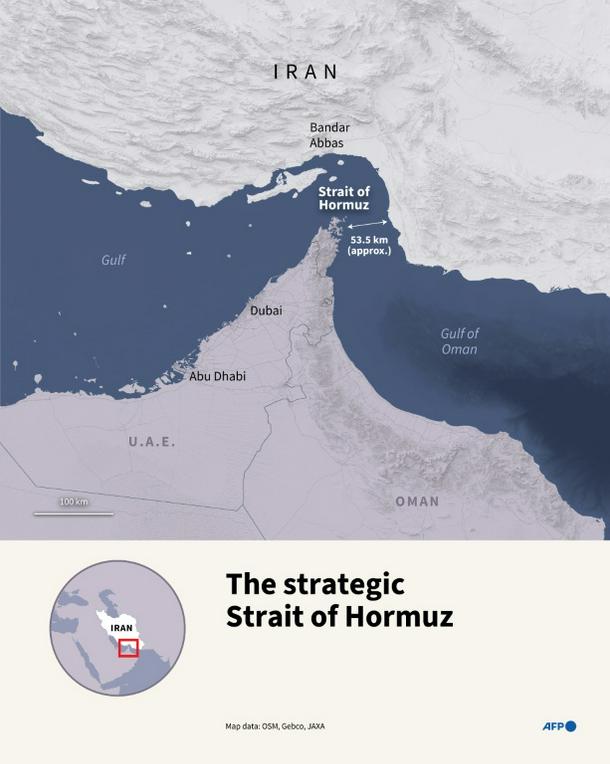
Infographic with a map of the Strait of Hormuz, a vital chokepoint for global oil shipments linking the Gulf and the Gulf of Oman
Pentagon chief Pete Hegseth said Washington was “not looking for a fight” over the waterway and downplayed the latest Iranian attacks while warning that any more would be met with a “devastating response”.
Washington and Gulf have meanwhile drafted a UN Security Council resolution demanding Tehran halt attacks, disclose the location of mines and end efforts to charge tolls, Rubio said.
The proposed measure would also require Iran to support a humanitarian corridor, with a vote expected in the coming days.
Despite that resolution, Iran’s powerful chief negotiator said on Tuesday that Tehran “had not even started yet” in the Hormuz strait.
On another front, Israel’s military on Wednesday issued a new evacuation warning for a dozen villages in southern Lebanon.
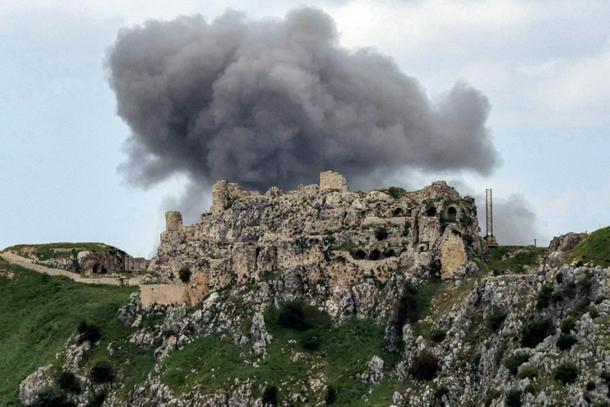
Smoke rises from Israeli bombardment on the village of Yohmor in southern Lebanon
Israeli bombardment later hit at least two villages including one near a 12-century Crusader-era castle, according to AFP images.
Israel and Iran-backed Hezbollah have kept up their attacks despite a ceasefire in Lebanon.
On Iran, Israel’s new air force chief said Tuesday the country was prepared to deploy its entire fleet of fighter jets against Iran if necessary.
Israel’s military chief of staff Eyal Zamir also said the country remained “on high alert across all fronts”.
burs-jfx/ser