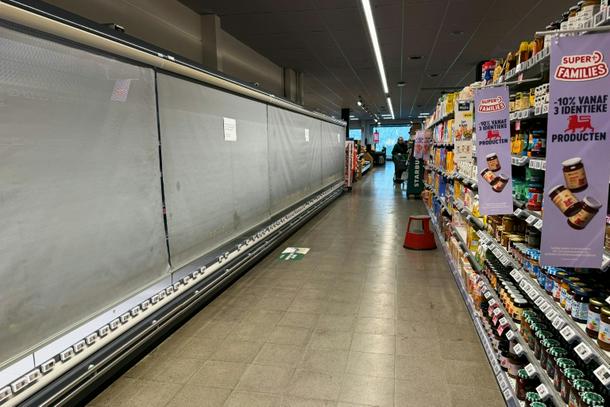
Supermarkets across Europe have been affected by a cyberattack that raised the temperature in freezers
Rome (AFP) - Germany, Romania and the UK on Tuesday joined the growing list of European nations hit by cyberattacks on supermarket refrigeration systems in recent days.
Italy’s government held emergency talks with intelligence chiefs on Tuesday in the wake of the issue, which prompted the EU to warn of a deliberate attempt to disrupt the bloc’s food supply chain.
The motive for the cyberattacks is not known and nobody has claimed responsibility yet.
EU spokesman Thomas Regnier said EU agencies were also talking with national authorities on Tuesday to come up with a collective response.
“These are not isolated incidents, and of course, we have to be collectively resilient and prepared for such cyber incidents,” he said.
But he refused to point the finger at any potential culprits.
Italy and the Netherlands were among the 10 or so EU countries hit, just weeks after hundreds of French supermarkets were forced to throw away spoiled stock in a similar incident.
Britain, which is not in the bloc, was also affected.
National cybersecurity chief Richard Horne told the BBC the issue affected “the whole food supply chain”.
He said staff had “worked through the night” to alert those at risk, adding that there had been a couple of instances where “vulnerable technology had been exploited”.
The British Association of Independent Meat Suppliers (AIMS) also told the BBC two of its members saw their fridges begin to defrost, while another saw the temperature of their cold units shoot up.
EU food and agriculture commissioner Christophe Hansen said on Monday the attacks were a “deliberate attempt to disrupt our food supply chain”.
Italy’s government said as yet the impact was “highly limited” and affected outlets with outdated security systems.
“Only a small number of commercial units have been affected,” the statement said.
Ministers nevertheless met intelligence chiefs and the National Cyber Security Agency, which also issued technical advice for retailers to protect their systems.
- ‘Semi-amateurish’ -
There were reports of around 20 outlets affected nationwide in Italy.
Giuseppe Spadaro, director of a group that manages the Coop supermarkets in Sicily, said four of the company’s 300 stores were hit.
“We estimate the damage at several thousands of euros. We had to throw away everything. The shelves are empty,” he was quoted as saying by the Corriere della Sera daily.
Four supermarket outlets were affected in Germany and six in Romania, officials and company representatives said on Tuesday.
“No other infrastructure was compromised,” Dan Cimpean, director of Romania’s National Cyber Security Directorate (DNSC), told AFP.
“It seems semi-amateurish. We do not suspect, under any circumstances, that it is a state actor.”
Carlos Cancinos, spokesperson for the Coop chain in Sweden, said the group’s seven affected shops had resumed “normal functioning”.
Refrigeration equipment and freezers affected overnight from Monday to Tuesday were connected to “old 4G networks”, he said.
“We have launched a major programme to modernise a large part of our store network, equipping connected refrigerators and ensuring that they operate via 5G networks. This helps to solve a large share of problems of this kind,” he said.
Belgium was among the hardest-hit countries, with dozens of stores across several grocery chains reporting refrigeration failures. Federal prosecutors there have opened an investigation.
burs/sbk/jxb