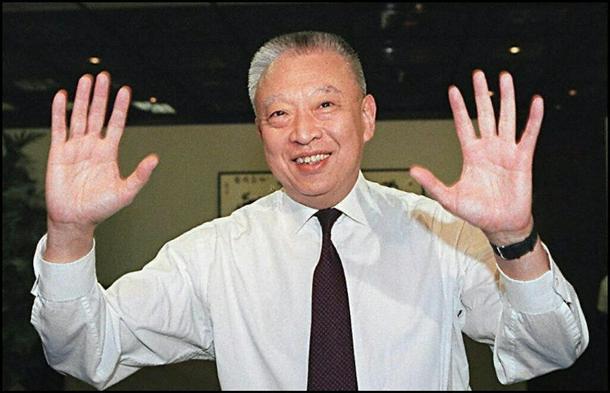
Hong Kong's first post-colonial leader Tung Chee-Hwa died age 89 on Tuesday
Hong Kong (AFP) - Tung Chee-hwa, Hong Kong’s first leader after the city’s return to Chinese rule, has died aged 89, his office said Wednesday.
China’s state news agency Xinhua hailed him as “an outstanding contributor to ‘One Country, Two Systems’, a renowned patriot, distinguished social activist and close friend of the Communist Party of China.”
The former shipping tycoon, hand-picked by Beijing to run the former British colony after its 1997 handover, oversaw a rocky tenure until he stepped down in 2005.
Tung served as a bridge during Hong Kong’s transition from colonial rule, steering the city as it was battered by the Asian financial crisis, the deadly SARS epidemic and mass protests in its turbulent early years under Chinese rule.
Tung “passed away peacefully in the presence of his beloved family members” on Tuesday, a statement from his office said.
“Mr. Tung dedicated his life with an unwavering commitment to the service of the Nation and the Hong Kong SAR. His contributions with integrity, compassion, and dignity will be well remembered,” it said.
Hong Kong’s chief executive John Lee said that Tung’s contribution had been “visionary” and “exceptionally significant”.
- Son of shipping dynasties -
Known for his distinctive grey crew cut and support for Liverpool football club, Tung was born in Shanghai on May 29, 1937, into one of China’s richest shipping dynasties.
A staunch conservative who named Deng Xiaoping, Lee Kuan Yew and Margaret Thatcher as his political heroes, he was deeply trusted by Beijing’s leadership and ran Hong Kong from the 1997 handover to 2005 when he resigned in the wake of large protests.
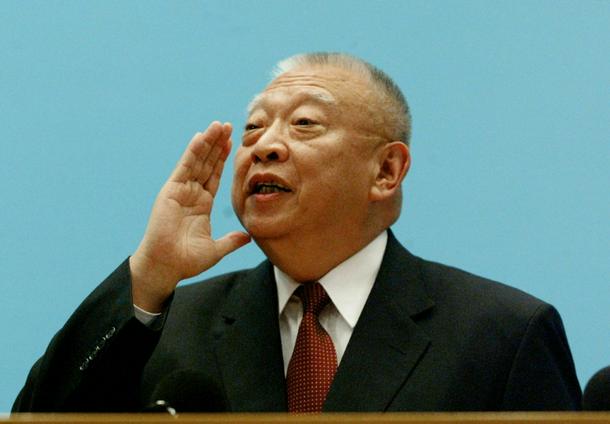
Hong Kong's former chief Tung Chee-hwa gestures during a press conference in 2005, announcing his resignation
Tung immigrated to Hong Kong from mainland China in 1947 with his family.
In the 1960s, he graduated from the University of Liverpool and worked in the United States before returning to Hong Kong to join the family business in 1969.
In 1985, Tung joined a committee to aid in the writing of the Basic Law, Hong Kong’s mini-constitution.
There was feverish speculation as to who Beijing would choose to run the international business hub once Britain departed. But the guessing game stopped when then-Chinese leader Jiang Zemin cut a marked route across a crowded room to give Tung a warm handshake.
Tung was duly elected Hong Kong’s first post-handover chief executive by the small committee Beijing had tasked with choosing the city’s leaders.
Widely believed to have been thrown reluctantly into the lion’s den of leadership because of his close links to Beijing, Tung had a tumultuous eight-year tenure as the city’s leader.
- Turbulent tenure -
The first years of his leadership coincided with the Asian financial crisis, record unemployment and a crash in the city’s property market which hit many ordinary citizens hard.
His leadership was also marred by his government’s botched handling of a 1997 avian flu outbreak, and the deadly 2003 SARS outbreak.
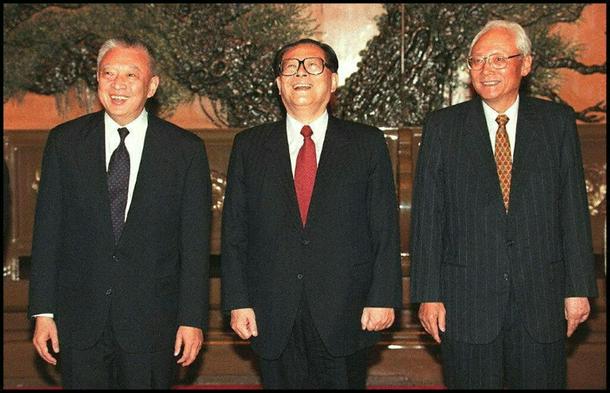
Hong Kong's former chief Tung Chee-hwa (L) laughs with then-Chinese president Jiang Zemin (C) and Lu Ping (R), head of the Hong Kong and Macau Affairs
More than half a million Hong Kongers hit the streets in July 2003 to protest against restrictive anti-subversion laws proposed by China.
The government was forced to shelve the bill, but July 1 protest marches to mark the handover anniversary became an annual fixture.
And the 2003 protests set in motion years of pro-democracy rallies in Hong Kong – including the huge and sometimes violent democracy movement in 2019 – which eventually resulted in an even more draconian security law imposed by Beijing.
In 2024, city officials separately passed a homegrown security law, as known as Article 23, the bill proposed by Tung’s administration that led to his resignation.
Tung’s tenure reached its nadir in December 2004 when he and his cabinet were given a public dressing-down by China’s then-president Hu Jintao for poor performance.
- ‘Old dumb Tung’ -
Tung became known for comfortably inhabiting different skins, and catering his message for mainland, local and international audiences.
One of Tung’s famous phrases was “If Hong Kong does well, China does well too. If China does well, Hong Kong becomes better.”
But Hong Kongers nicknamed him “old dumb Tung” as his approval ratings slid, with mounting fears over the future of free speech in the territory.
Tung quit the helm with two years left of his second term in 2005, blaming poor health, and was replaced by his deputy, chief secretary Donald Tsang.
After stepping down, he served as vice chairman of China’s top political advisory body
In recent years, Tung remained largely out of the public eye, remaining absent from many official events including the July 1 handover anniversary flag-raising ceremonies.