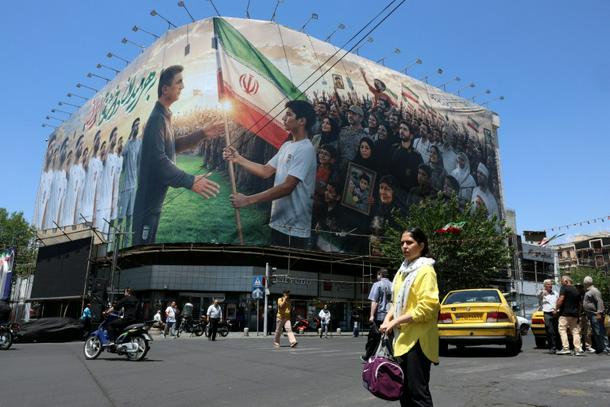
The US and Iran have exchanged threats but diplomatic efforts remain ongoing
Washington (United States) (AFP) - President Donald Trump warned Tuesday that the United States may strike Iran again – a day after he said he had held off a major assault in hopes of a peace deal – but Tehran’s army threatened to open “new fronts” if he went ahead.
Trump told reporters at the White House that he had been just “an hour away” from relaunching Washington’s attacks on Iran before postponing the order, after weeks of a fragile ceasefire and talks to end the war, which began on February 28.
“You know how it is to negotiate with a country where you’re beating them badly. They come to the table, they’re begging to make a deal,” he said.
“I hope we don’t have to do the war, but we may have to give them another big hit. I’m not sure yet.”
Iran, as well as many observers, dispute Trump’s take on the power dynamics and note that Tehran has been able to exert leverage through control over the vital Strait of Hormuz, driving up global oil prices.
Iran’s army spokesman Mohammad Akraminia warned the Islamic republic would “open new fronts against” the United States if it resumed its attacks.
He added that Iran’s military had used the ceasefire as an opportunity “to strengthen its combat capabilities.”
Iran’s Foreign Minister Abbas Araghchi said early Wednesday that Iranian forces are confirmed to be the first to down an American F-35 fighter jet, citing a US congressional report on aircraft combat losses.
“With lessons learned and knowledge we gained, return to war will feature many more surprises,” Araghchi wrote on X.
Trump offered a deadline of several days for resuming strikes if a deal was not agreed.
“I’m saying two or three days, maybe Friday, Saturday, Sunday, something, maybe early next week, a limited period of time,” he said.
Trump said on Monday that Gulf Arab leaders had asked him to hold off on an attack at the 11th hour.
Vice President JD Vance, who negotiated with Iran in failed talks in Pakistan, also said that the United States was “locked and loaded” but voiced hope for a diplomatic solution.
“A lot of good progress is being made, but we’re just going to keep on working at it, and eventually we’ll either hit a deal or we won’t,” Vance, described as a skeptic of the unpopular war, told reporters at the White House.
Trump had already indefinitely extended the truce and made clear he wants to exit a war that has proven to be a political liability, with Americans paying more to fill their car tanks, frustrated with the war and looking ahead to congressional elections in November.
Iran’s Deputy Foreign Minister Kazem Gharibabadi wrote on X that Trump’s comments meant the US leader was “calling a ‘threat’ a ‘chance for peace’!”
- Condemnation of strike on nuclear plant -
Since the ceasefire took hold on April 8, Tehran and Washington have held only the single round of talks which involved Vance.
Iran’s cleric-run state has proven resilient, though its supreme leader was killed on the first day of the war. It has made major demands in talks, including the release of Iranian assets frozen abroad, the lifting of long-standing sanctions and reparations for the war.
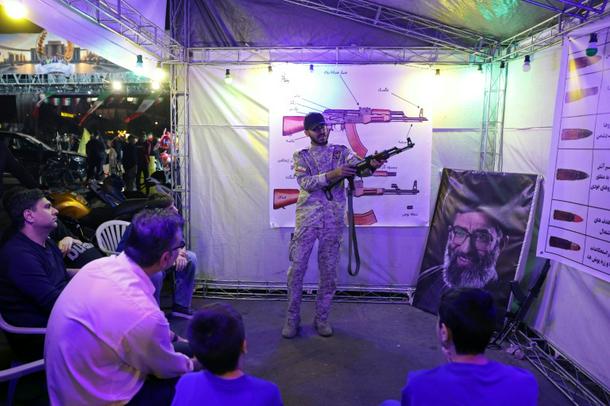
Iranian military personnel educate people how to use a gun in Tehran
Iran has also been ramping up military pressure.
The United Arab Emirates was rattled by a drone attack on its Barakah nuclear power plant last week. It said Tuesday that it originated from Iraqi territory, where Iran backs groups accused of launching attacks on Gulf nations in the war.
The UN Security Council on Tuesday condemned the attack. Russia, which often defends Iran, joined the other members.
“Attacks targeting peaceful nuclear facilities in any country of the world…are categorically unacceptable,” said Russia’s ambassador to the UN, Vassily Nebenzya.
- More Israeli strikes on Lebanon -
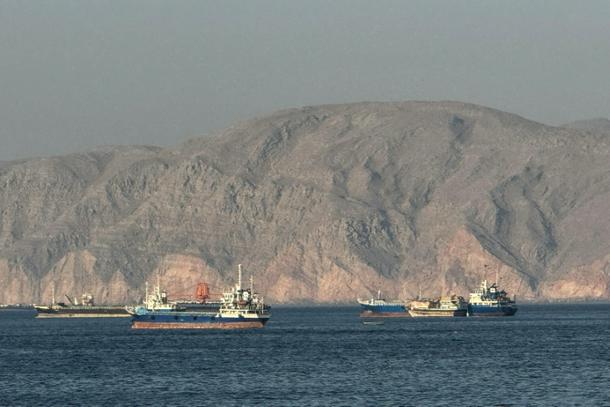
Iran's control of the Strait of Hormuz has rattled global markets
Iran has also demanded an end to Israel’s strikes in Lebanon, which began in retaliation for the Iranian-backed Shia movement Hezbollah’s attacks on Israel.
The Israeli military on Tuesday launched a series of strikes across Lebanon, killing 19 people, according to the Lebanese health ministry.
One strike, in the town of Deir Qanun al-Nahr in the Tyre district, killed 10 people including three children and three women, the ministry said.
The Israeli army in turn said that it intercepted a drone fired from Lebanon.
Israel and Lebanon’s central government have twice extended a US-brokered ceasefire, but Israel says it does not apply to its attacks on Hezbollah.
In one possible sign of diplomatic progress, a rights group said that an Iranian citizen who holds US permanent residency was released from prison and returned to the United States.
Shahab Dalili had served 10 years in prison after a sentence for allegedly “cooperating with a hostile government,” the Human Rights Activists News Agency said.